
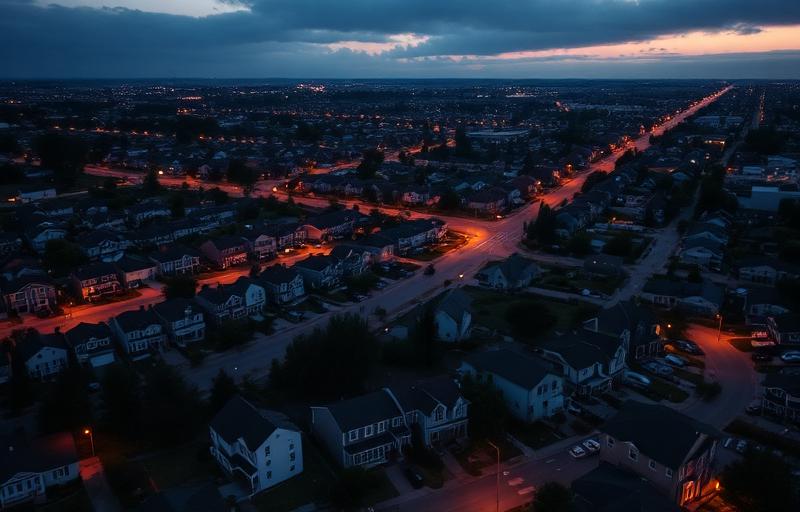
Most STR investors run detailed financial analysis before they buy. They model occupancy rates, run comparable nightly rates, estimate operating expenses, factor in cost segregation, and calculate expected tax savings. They do all of that before they've spent five minutes looking at something that can invalidate every other number in the model: neighborhood safety.
A property in a market with strong STR demand can still be a terrible investment if it's in the wrong part of that market. And the consequences aren't just financial — a guest who feels unsafe will leave a review that follows your listing for years.
- Neighborhood safety has a direct, measurable impact on STR occupancy and nightly rates.
- Street-level crime data (not just broad area statistics) is the relevant metric for STR investors.
- Guest reviews mentioning safety concerns are one of the most damaging and persistent listing problems.
- This research takes 30 minutes and can save you from a six-figure mistake.
Why This Is the Due Diligence Blind Spot
Real estate investors who focus on traditional rentals often accept that some neighborhoods carry more risk than others as a trade-off for higher cap rates. Tenants sign leases and stay. They know what they're getting into.
STR guests don't sign leases. They book a place for a weekend, often based on photos, amenity lists, and aggregate ratings. Many of them have never visited the city. They don't know which streets are safe and which aren't. And when they arrive and discover the neighborhood doesn't match their expectations, they write about it.
A single review that says "the area felt unsafe" or "we didn't feel comfortable walking to dinner" starts a compounding problem. Your listing gets less visibility. Your occupancy rate drops. You lower your prices to compete, which attracts guests who are more tolerant of risk — and who sometimes bring problems of their own.
What to Look For and Where to Find It
Street-level crime data is the metric that matters. City-wide statistics tell you almost nothing useful. A city can be statistically average while having neighborhoods that are dramatically safer or more dangerous than the mean.
Sources to check before you buy:
- Doorprofit and similar STR analytics tools include neighborhood-level data in their market analysis.
- Local police department crime maps — most major departments publish these publicly and update them regularly.
- SpotCrime, CrimeMapping, and NeighborhoodScout aggregate and visualize incident data by address or radius.
- Airbnb and VRBO reviews of nearby listings — search competing properties within a quarter mile and read what guests say about the area.
- Google Street View at different times of day — look at the condition of neighboring properties, commercial operations nearby, and street-level context.
The goal is street-specific data for the block and immediate surrounding area, not aggregate city or zip code statistics.
What the Data Actually Reveals
When you look at neighborhood-level crime data for STR purposes, you're focused on a specific subset of incident types:
- Theft and property crime — the biggest concern for STR guests, especially vehicle break-ins, which guests often park in unfamiliar areas.
- Assault and robbery — incidents within walking distance to restaurants, bars, and attractions directly affect guest comfort.
- Incident frequency trends — is crime increasing, stable, or declining? Trend matters more than a single snapshot.
You're not trying to find a zero-crime neighborhood. Urban markets with the best STR demand rarely are. You're trying to identify whether a property is in a materially riskier microzone compared to the comparable listings you're using to model revenue.
The Review Problem: How Safety Issues Compound
Here's the financial case for doing this research:
Suppose you buy a property with strong projected occupancy based on comps. In your first six months, two or three guests mention safety concerns in reviews. Those reviews become prominent in your listing profile. Your search ranking drops because Airbnb's algorithm weights new negative reviews heavily. Potential guests see the comments and book competing properties instead.
You're now competing on price to fill dates. Your actual occupancy is 15-20 percentage points below your projections. Your nightly rate is 10% lower than your model. Annualized, you're $15,000-$30,000 short of projected revenue — before you factor in the additional stress of managing a property with ongoing issues.
None of this shows up in your pre-purchase model. It all shows up in year-one actuals.
How to Build Safety Into Your Underwriting
Once you have crime data, build it into your analysis as a revenue adjustment, not an afterthought.
- If a property is in a notably safer location than competing listings, that's a pricing premium opportunity.
- If a property is in a location with materially higher crime than comps, apply a 10-20% discount to your revenue projections.
- If the data reveals multiple safety-type incidents per month within a quarter-mile radius, disqualify the property regardless of the financial metrics.
The logic is simple: you can improve almost everything else about an STR with effort and capital. You cannot move the property.
Visiting the Property at Night
No data source replaces a visit. Drive or walk the block in the evening. Walk to the nearest restaurants or bars. Take note of what's open, what's closed, and what the street-level environment feels like at the time your guests will be arriving and leaving.
This takes two hours and eliminates the largest unmodeled risk in most STR acquisitions.
The Market Research Checklist
Before committing to a property:
- Pull street-level crime data from at least two sources.
- Read reviews of the 5-10 nearest competing listings — look specifically for safety-related language.
- Check Google Street View for the immediate block and nearby streets.
- Visit the property at night (or in the evening) in person.
- Apply a revenue discount if safety data is mixed, or disqualify if it's clearly problematic.
Your financial model is only as good as the assumptions behind it. Neighborhood safety is one of those assumptions — and unlike cap rates and occupancy projections, it's a factor you can verify with certainty before you buy.
The Bottom Line: Neighborhood safety is the due diligence blind spot that tanks otherwise solid STR investments. Check street-level crime data before you run your numbers, schedule a showing, or fall in love with a property.
Ready to see if you qualify? Try the free STR loophole calculator →
Start Tracking Your Hours Today
STR Loophole makes documentation effortless. Sign up free on the web, then log from your desk or the mobile app — everything syncs.