
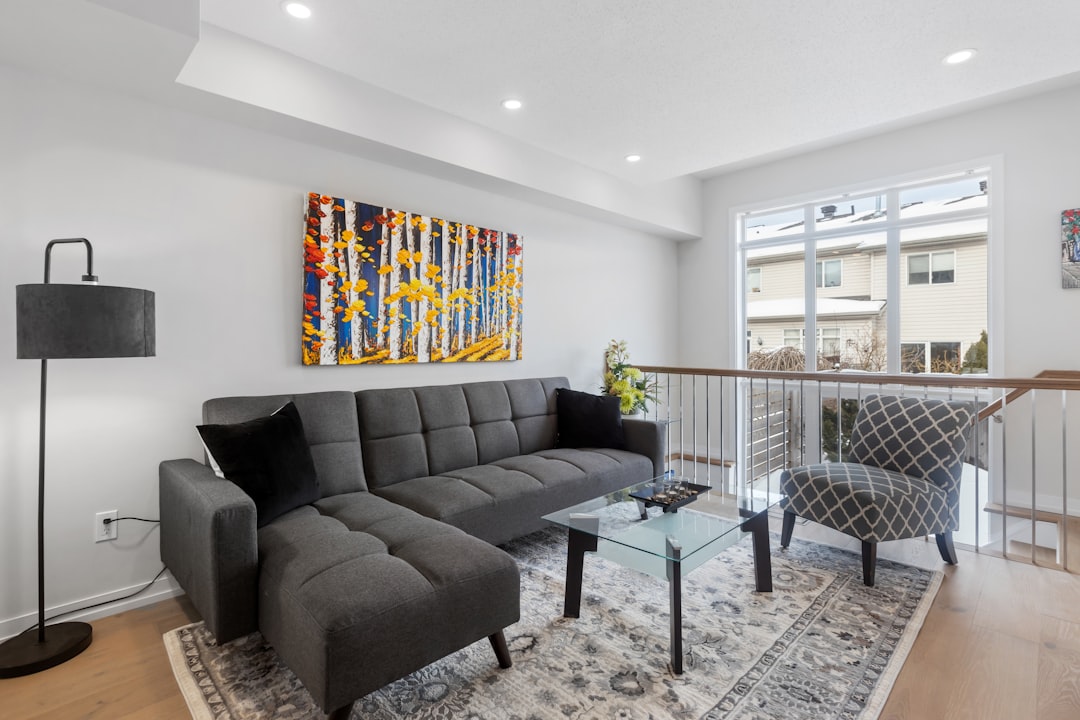
You just spent $22,000 furnishing a mountain cabin that will be an Airbnb. Couches, a dining table, beds, a coffee maker, throw blankets, wall art, and the professional staging shoot to make it look great in photos. Now your CPA says some of that gets "depreciated over five years." You are wondering: does it have to be? And if there is a better way, why did nobody mention it at closing?
There is a better way. For most STR owners using the STR loophole, the entire cost of qualifying furnishings can come off your taxes in year one. Here is how.
TL;DR: Furniture, appliances, and most personal property placed in a short-term rental qualify as 5-year MACRS property and are eligible for 100% first-year bonus depreciation under IRC §168(k), permanently restored by the One Big Beautiful Bill Act for property acquired after January 19, 2025. For STR owners who materially participate on a property with an average guest stay of 7 days or less, that first-year deduction becomes a non-passive loss that offsets W-2 income directly.
Jennifer Beadles is a real estate investor and short-term rental owner who uses the STR loophole on her own properties. She writes from hands-on operating experience plus current IRS guidance (IRC §469 and Treas. Reg. §1.469-1T(e)(3)(ii)(A)).
The Direct Answer: Most STR Furnishings Are Deductible All at Once
When you furnish a short-term rental, you are buying personal property, not real property. The IRS places furniture, appliances, and similar items used in a transient lodging business in the 5-year MACRS (Modified Accelerated Cost Recovery System) property class. Five-year property has a recovery period of 20 years or less, which means it qualifies for bonus depreciation under IRC §168(k).
Since the One Big Beautiful Bill Act was signed into law in July 2025, bonus depreciation is 100% and permanent for qualifying property acquired after January 19, 2025. That means a couch you buy today for the rental is fully deductible in the year you place it in service. Not over five years. Not spread across your holding period. This year.
Here is something a lot of people do not realize: you do not need a cost segregation study to get this deduction. Cost segregation is an engineering analysis that reclassifies building components like flooring and cabinetry from 27.5-year property into shorter-lived categories. But furnishings are already 5-year assets. They are already in the right bucket. The full deduction is yours without paying for a study.
The two paths to that full first-year deduction are:
- Bonus depreciation (IRC §168(k)): No cost cap, no income limitation, applies automatically unless you elect out.
- Section 179 (IRC §179): An immediate expensing election with a $2.5 million deduction limit (phasing out above $4 million of total property placed in service). Most individual STR owners are well under those thresholds.
For most people, bonus depreciation is simpler and gets you to the same place.
Why the STR Loophole Is What Makes This Actually Matter for Your W-2
Here is the part that changes everything.
A rental property normally produces passive income and passive losses. If your STR shows a $30,000 paper loss from depreciation, it usually sits in a "suspended loss" bucket and cannot touch your W-2 income. You cannot use it. Not until you sell.
The STR loophole changes that. Under Treas. Reg. §1.469-1T(e)(3)(ii)(A), a rental whose average guest stay is 7 days or less is not classified as a rental activity under IRC §469. It becomes a trade or business. That single reclassification means you only need to materially participate, and when you do, the losses are non-passive. They offset W-2 and other ordinary income dollar for dollar.
You do not need to be a real estate professional. You do not need 750 hours. The STR loophole is a separate, simpler path. For a deeper look at the 7-day rule itself, see our article on how the 7-day rule works in the STR loophole.
Material participation is most commonly proved under Test 3 of Treas. Reg. §1.469-5T: you logged more than 100 hours in the activity AND more hours than anyone else, including your cleaners, your co-host, and your property manager. If you handle your own guest communication, scheduling, maintenance calls, and restocking, you are often already there.
The De Minimis Safe Harbor: The Easiest Path for Small Items
Before you even reach bonus depreciation, there is a simpler rule for smaller purchases.
Under Treas. Reg. §1.263(a)-1(f), if you do not have an applicable financial statement (most individual STR owners do not), you can expense any item costing $2,500 or less per unit directly on Schedule E in the year of purchase. No depreciation schedule. No Form 4562. Just a line-item expense.
This covers a lot of staging and furnishing purchases: throw pillows, lamps, dish sets, small appliances, welcome baskets, artwork. If a single item costs $2,500 or less and you bought it for the rental, expense it and move on.
Items over $2,500 (a sofa, a washer/dryer, a king bed frame) move into the bonus depreciation or Section 179 analysis.
A Worked Example: $22,000 Furnishing Budget, One Year
Here is how the numbers work for a realistic first-year STR setup.
Assumptions:
- You purchased and furnished the property in 2025 (after January 19, 2025)
- Total furnishing spend: $22,000
- Items under the $2,500 de minimis threshold: $4,000 (linens, décor, small appliances)
- Items over $2,500, eligible for bonus depreciation: $18,000 (sofa, dining set, beds, washer/dryer)
- Your W-2 income: $175,000
- Your marginal federal tax rate: 32%
- The rental qualifies under the 7-day average stay rule
- You materially participate (100+ hours, more than anyone else)
Step 1: De minimis items $4,000 expensed directly on Schedule E. No further calculation needed.
Step 2: Bonus depreciation on remaining furnishings $18,000 × 100% bonus depreciation = $18,000 deducted in year one.
Step 3: Total first-year furnishing deduction $4,000 + $18,000 = $22,000 deducted in 2025.
Step 4: Tax savings $22,000 × 32% = $7,040 in federal tax savings in year one.
Without the STR loophole's non-passive treatment, that $22,000 loss sits trapped in the passive bucket and saves you nothing this year. With it, you get $7,040 back. At a 37% rate (the top bracket), the same $22,000 saves $8,140.
Is it always worth it? Yes, if you are already operating the STR and logging your hours. The cost of proof is low. The reward is real.
Replacements Get the Same Treatment
Here is a question that comes up a lot: what happens when you have to buy a new couch in year two because the first one wore out?
That replacement couch gets fully depreciated too. Any qualifying personal property you purchase for the rental gets 100% bonus depreciation in the year you place it in service. It does not matter that you already deducted the original couch. The new purchase is a new asset, and the same rules apply. Year two couch, year three mattress, year four smart TV. Each one is fully deductible in the year you buy it.
What About Staging Costs Specifically?
Staging sits in a slightly different category depending on what "staging" actually means for your property.
Items that stay in the rental (art on the walls, decorative pillows, rugs, accent furniture): these become part of the property's furnishings. They are personal property, eligible for the de minimis rule if under $2,500 per unit, or for bonus depreciation if over that threshold.
Pure photography props that are removed after the shoot: these are not depreciable assets. They are a marketing or advertising expense, deducted as an ordinary business expense in the year incurred. Still fully deductible. Just on a different line.
Professional staging service fees: the fee paid to a staging consultant or photographer is also an ordinary business expense, deducted in full in the year paid. No depreciation needed.
The full STR tax deduction checklist for 2026 breaks out all these expense categories in detail if you want a line-by-line reference.
When Cost Segregation Does Enter the Picture
You do not need cost segregation to deduct your furnishings. But for STR owners spending beyond furnishings alone, say a full renovation or a significant build-out, cost segregation does become relevant.
A cost segregation study is an engineering analysis that reclassifies portions of what would normally be 27.5-year residential real property into 5-, 7-, or 15-year property categories. Structural components (roof, framing, plumbing tied to the structure) stay at 27.5 years. But items like flooring, cabinetry, specialty electrical, landscaping, and land improvements can often be reclassified into shorter-lived buckets. Those reclassified components then also qualify for 100% bonus depreciation in year one.
On a $400,000 property, a cost segregation study might identify $100,000 to $140,000 of reclassifiable property. At a 32% rate, that is $32,000 to $44,800 in first-year federal tax savings on top of anything you are already deducting on furnishings.
The details on how to structure a cost seg study for an STR are covered in our cost segregation and the STR loophole guide. You can also run your own numbers at the STR cost segregation calculator to see what a study might produce for your specific property before you pay for one.
Key Takeaways: The Rules at a Glance
- Under $2,500 per item: use the de minimis safe harbor and expense it directly.
- Over $2,500, placed in service after January 19, 2025: elect 100% bonus depreciation under IRC §168(k) and deduct the full cost in year one.
- No cost segregation needed for furnishings: they are already 5-year assets. The deduction is built in.
- Replacement items get the same treatment: a new couch in year two is fully depreciated in year two.
- Staging items that stay: treated as furnishings (same rules above).
- Staging services and photography fees: ordinary business expenses, deducted in the year paid.
- The STR loophole is what makes the loss non-passive: without it, the depreciation deduction is real but the tax savings are deferred until you have passive income to offset.
Documenting Everything: The Part People Skip
Deductions are only as good as your records.
For each furnishing purchase, keep the receipt with the date, amount, and item description. Take a photo of the item in place in the rental. If you have a lot of items, a simple spreadsheet with columns for item name, cost, date placed in service, and category (de minimis vs. bonus depreciation) is enough for most CPAs to work with.
More detail on structuring that documentation lives in our bonus depreciation strategy guide.
On the material-participation side, your hour logs are equally critical. Contemporaneous records (logged in real time, not reconstructed later) are what survive an IRS audit. The STR Loophole app at strhours.com is built specifically for this: it logs your hours with timestamps, syncs with Hospitable and adds a default 5 minutes per guest message because there is almost always a back-and-forth exchange, and produces the kind of exportable record your CPA and the IRS actually want to see. That said, we recommend you set the time spent to your actual time rather than relying solely on the auto-log. The auto-log saves time and adds evidence, but your real communication time may be longer or shorter than 5 minutes per message.
Sources
- IRC §168(k), Bonus Depreciation
- IRC §179, Section 179 Expensing
- IRC §469, Passive Activity Loss Rules
- Treas. Reg. §1.469-1T(e)(3), STR Exception
- Treas. Reg. §1.469-5T, Material Participation
- Treas. Reg. §1.263(a)-1(f), De Minimis Safe Harbor
- IRS Publication 527, Residential Rental Property
- IRS Publication 946, How to Depreciate Property
This article is for educational purposes only and is not tax or legal advice. Talk to a CPA who knows short-term rentals before you act on it.
The Bottom Line: STR furnishings are already 5-year assets, so you do not need a cost segregation study to deduct them in full in year one. With 100% bonus depreciation restored by the One Big Beautiful Bill Act, every couch, bed, and appliance you buy for the rental is fully deductible the year you place it in service. The STR loophole is what turns that paper loss into real savings against your W-2 income.
Ready to see if you qualify? Try the free STR loophole calculator →
Start Tracking Your Hours Today
STR Loophole makes documentation effortless. Sign up free on the web, then log from your desk or the mobile app — everything syncs.