
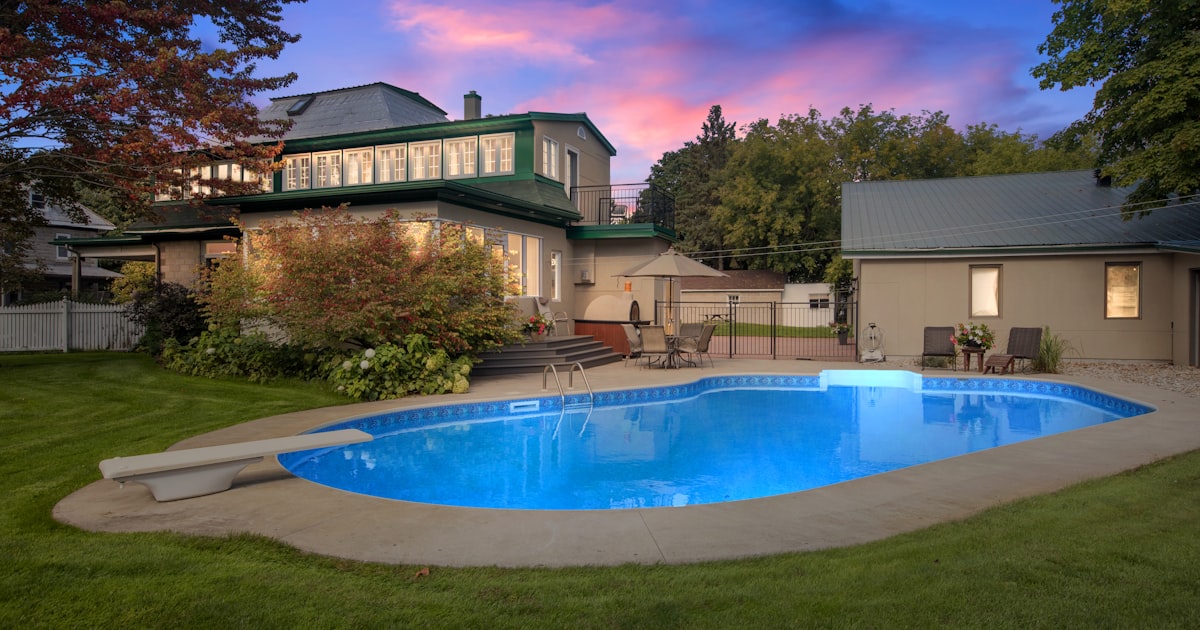
Yes. An STR on the same lot as your primary home (an ADU, casita, guest house, or basement unit) can qualify for the loophole if it is a genuinely separate dwelling unit with its own entrance, kitchen, and bath. The §280A personal use rules are applied per dwelling unit, so living in your main house does not automatically count as personal use of the rental unit.
Based on IRC §280A and Treas. Reg. §1.469-1T(e)(3)(ii)(A), written from the perspective of an investor who builds and operates detached accessory units.
The qualification gates are the same
Sharing a lot with your home does not change the two core requirements. The accessory unit still has to hit an average guest stay of 7 days or less, and you still have to materially participate under Treas. Reg. §1.469-5T. If your detached unit averages 4-day Airbnb stays and you run the operation yourself, both gates are met. The land underneath does not change that analysis.
What changes is the personal use question, and that is where same-lot setups get tripped up.
Why §280A is the real landmine
IRC §280A limits deductions when you use a "dwelling unit" personally for more than the greater of 14 days or 10% of the days it is rented at fair value. Cross that line and the unit is reclassified as a personal residence, and your deductions get capped at rental income. No big loss, no W-2 offset.
The critical question on a shared lot is: does living in your main house count as personal use of the rental unit? If the two are one dwelling unit, yes, and you are almost certainly over the limit because you live there year-round. If they are two separate dwelling units, no, and your residence does not contaminate the rental.
Dwelling unit (IRC §280A(f)(1)): A house, apartment, condominium, or similar property, including separate structures. A single building or lot can contain more than one dwelling unit, and the personal use test is applied to each unit separately.
What makes the accessory unit "separate"?
The IRS looks at whether the unit functions as an independent dwelling. The cleaner the separation, the stronger your position. Aim to hit as many of these as possible:
- Separate, lockable entrance the guest uses without entering your home
- Its own kitchen or kitchenette
- Its own full bathroom
- Its own sleeping area
- Separate utilities or a defensible allocation method
- A distinct unit identifier or address where possible
A detached ADU with its own kitchen, bath, and entrance is a textbook separate dwelling unit. A finished basement that guests reach by walking through your living room, with no kitchen and a bathroom you also use, is a much weaker case and may be treated as part of your residence.
How personal use is tested on a shared lot
| Setup | Treated as | Your home counts as personal use of the rental? | Loophole risk |
|---|---|---|---|
| Detached ADU, own entrance/kitchen/bath | Separate dwelling unit | No | Low if you limit personal use of the ADU itself |
| Casita or garage apartment, fully self-contained | Separate dwelling unit | No | Low |
| Basement suite, shared entrance, no kitchen | Likely part of residence | Yes | High |
| Spare bedroom in your home | Part of residence | Yes | Disqualifying |
Even with a clean separate unit, watch your own use of that unit. Personal nights you (or family) spend in the ADU still count toward the §280A limit for the ADU. Under IRC §280A(d)(2), use by your spouse, kids, parents, and siblings counts as your personal use, even when you are not there. So letting your in-laws stay in the casita for three weeks every summer can blow the limit on its own. Our guide to personal use days walks through the day-count math in detail.
Basis and expense allocation
Because the rental shares a parcel with your home, you cannot depreciate or deduct the whole property. You allocate basis between your residence and the rental unit using a reasonable method (square footage is common), then depreciate only the rental portion. A cost segregation study can still apply to the rental unit's allocated basis. Keep the allocation documented, because a shared-lot return is exactly the kind of fact pattern an examiner looks at closely.
Key takeaways
- A same-lot STR can qualify if it is a genuinely separate dwelling unit.
- §280A is applied per dwelling unit, so your home does not taint a separate rental unit.
- Separation features (entrance, kitchen, bath) determine whether the unit stands on its own.
- Your own and your family's nights in the rental unit still count toward its §280A limit.
- Allocate basis and expenses between residence and rental, and document the method.
Sources
- IRC §280A (Disallowance of Certain Expenses): https://www.law.cornell.edu/uscode/text/26/280A
- Treas. Reg. §1.469-1T(e)(3)(ii)(A) (7-day exception): https://www.law.cornell.edu/cfr/text/26/1.469-1T
- IRS Publication 527 (Residential Rental Property): https://www.irs.gov/pub/irs-pdf/p527.pdf
Last updated: June 2026 Author: Jennifer Beadles, a real estate investor with 17+ years of experience and a multi-state portfolio who operates the Timber & Tide short-term rental in Everett, WA.
This article is for educational purposes only and is not tax or legal advice. Consult a qualified CPA familiar with real estate before implementing any strategy.
Ready to see if you qualify? Try the free STR loophole calculator →
Start Tracking Your Hours Today
STR Loophole makes documentation effortless. Sign up free on the web, then log from your desk or the mobile app — everything syncs.