
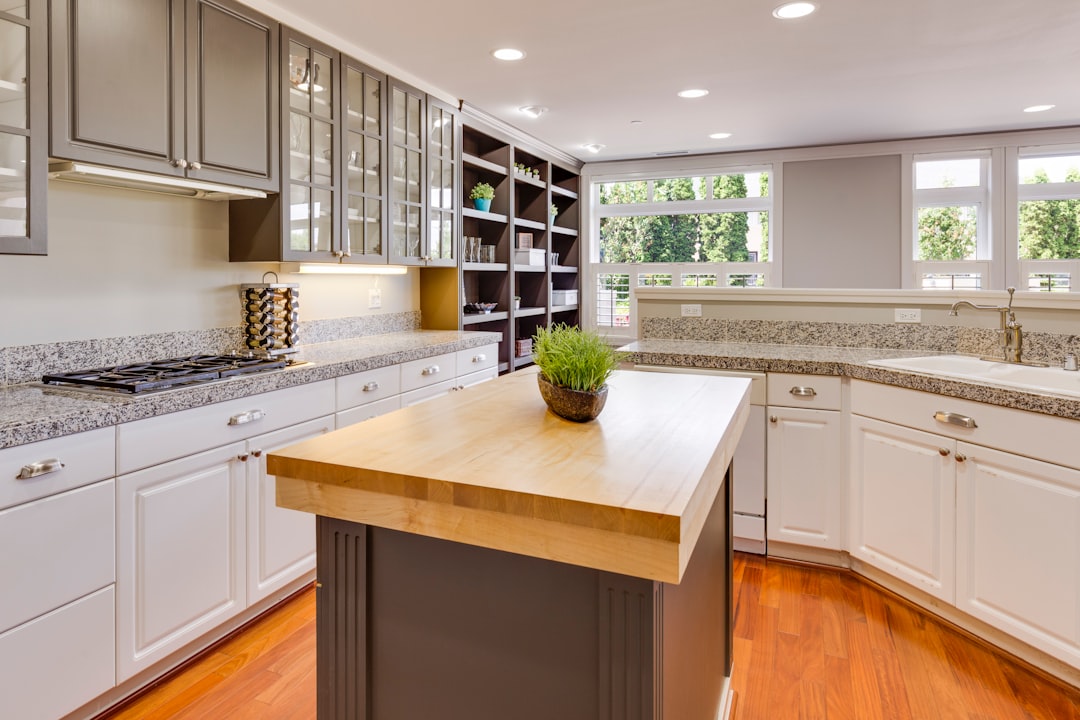
You finally pulled the trigger on that kitchen gut renovation. The property is dark for six weeks, no guests are checking in, and you're spending weekends supervising contractors and picking out tile. Meanwhile, tax season is creeping closer and a nagging question settles in: does any of this still count? Does being offline kill the STR loophole?
The answer is more nuanced than a simple yes or no, and the details matter a lot.
TL;DR: A renovation period does not automatically break the STR loophole. The 7-day average stay rule is calculated over the rental days you actually had, not the calendar year. Renovation hours can count toward material participation if you are performing management or coordination work, not just watching contractors. Deductions continue on most property expenses, and a cost segregation study can be timed to the renovation itself.
Jennifer Beadles is a real estate investor and short-term rental owner who uses the STR loophole on her own properties. She writes from hands-on operating experience plus current IRS guidance (IRC §469 and Treas. Reg. §1.469-1T(e)(3)(ii)(A)).
Does a Renovation Period Break the STR Loophole?
No, a renovation period does not break the STR loophole on its own. The core test under Treas. Reg. §1.469-1T(e)(3)(ii)(A) is whether the average guest stay across your rental activity is 7 days or less. That average is calculated by dividing total rental days by the number of stays during the year. Weeks when the property sits vacant for renovations are simply not rental days. They do not push your average up or down.
So if you had 40 stays totaling 200 rental days before you took the property offline, your average stay is 5 days. The renovation period is invisible to that calculation.
The risk is not the renovation itself. The risk is what happens on either side of it.
How the 7-Day Average Stay Rule Works During a Renovation Year
Think of the rule as a fraction. Numerator: total rental days. Denominator: number of rental stays. Renovation weeks simply shrink the numerator without adding any stays to the denominator, which often makes the fraction smaller, meaning your average stay may actually improve during a renovation year because you tend to lose longer, off-season stays while keeping the tighter short-term bookings on either end.
That said, if you close in January, renovate through March, and then reopen with a wave of week-long spring bookings, watch your average closely. A string of 7-day stays sits right on the edge. One or two 10-day bookings could tip you over.
This is exactly the scenario covered in what happens if your average stay creeps above 7 days mid-year. Read that post before you finalize your spring booking calendar.
Can Renovation Hours Count Toward Material Participation?
This is where most STR owners get it wrong. The answer is: some renovation hours count, and some do not.
Under Treas. Reg. §1.469-5T, material participation hours are hours you spend in the operations of the activity. The IRS and Tax Court have interpreted "operations" to include management, oversight, coordination, and decision-making work related to running the rental. That standard does not disappear when the property is offline.
Hours that generally count:
- Coordinating with contractors (calls, site visits, reviewing bids)
- Selecting finishes, fixtures, and furnishings for the rental
- Managing the renovation timeline and budget as it affects rental readiness
- Updating booking platforms, managing future reservations, and handling guest communications about reopening
- Researching and purchasing new inventory or equipment
Hours that generally do not count:
- Physically swinging a hammer or doing the construction labor yourself (this can be treated as capital improvement work, not rental management)
- Passively watching contractors work
- Personal time spent at the property unrelated to the rental activity
The distinction the IRS draws is between participation in the activity's operations and simply owning an asset under repair. Management and coordination are operations. Passive observation is not.
If your renovation spans two or three months and you lose those months of guest activity, you may find yourself short on hours at year-end. Start logging early, log everything that qualifies, and make sure your post-renovation period is active enough to clear the 100-hour threshold.
For a deeper look at how setup and pre-opening hours get counted, see STR setup hours and material participation. The rules for a renovation period are closely related to the rules for that initial setup phase.
The 100-Hour Test During a Renovation Year
The most commonly used material participation test for STR owners is Test 3 under Treas. Reg. §1.469-5T: you spend more than 100 hours on the activity, and no other person spends more time than you do. This includes cleaners, co-hosts, and property managers.
During a renovation year, the 100-hour threshold does not change. But the competitive landscape does. Your cleaners and co-host are largely off the clock because there are no guests. Your property manager may be doing minimal work. That actually makes it easier to "win" the comparison test, even if your total hours are lower than a typical operating year.
Here is the math on why this matters.
Worked example:
Assume a normal operating year looks like this:
- You log 130 hours (guest communication, check-in coordination, restocking, oversight)
- Your cleaner logs 80 hours
- Your co-host logs 40 hours
- You clear Test 3 comfortably
In a renovation year where the property is dark for 10 weeks:
- You log 90 hours of qualifying management and renovation coordination
- Your cleaner logs 15 hours (post-renovation deep clean and a few partial-year cleans)
- Your co-host logs 20 hours
- You do NOT clear Test 3 because you fall below 100 hours
The fix is intentional effort. Schedule the post-renovation period so you are active in guest operations from reopening through year-end. Document every qualifying hour during the renovation itself. If you use a tool like the STR Loophole app to log hours in real time, a renovation period is actually a good time to stress-test your logging habits before the busy season resumes.
And remember: falling short of the 100-hour test does not mean you lose everything. Test 1 (500+ hours) and Test 2 (substantially all participation) still exist. If you put serious sweat equity into a major renovation, Test 1 may be in reach.
What Happens to Deductions While the Property Is Offline?
Most operating expenses continue to be deductible during a renovation period. Mortgage interest, insurance, property taxes, HOA fees, and ongoing utilities do not pause because guests are not checking in. Those are costs of holding the property as a rental, and they remain deductible under the ordinary-and-necessary expense rules.
The renovation costs themselves are a different story. Repairs that restore the property to its prior condition without adding new value are generally deductible as current expenses. Improvements that extend the life of the property or add value are capitalized and depreciated over time.
This is where a cost segregation study can be a significant move. If you are replacing flooring, adding a deck, upgrading HVAC, or doing a full kitchen renovation, a cost segregation engineer can reclassify portions of those capitalized costs into 5-, 7-, or 15-year property. Under current law, those components qualify for 100% first-year bonus depreciation under IRC §168(k), as permanently restored by the One Big Beautiful Bill Act (signed July 2025) for property acquired and placed in service after January 19, 2025.
Run the numbers with the cost segregation calculator to see how much of a renovation's cost basis could come back as a first-year deduction.
Paired with the STR loophole's non-passive treatment, those paper losses can offset your W-2 income dollar for dollar. That is the combination that makes a renovation year genuinely powerful, not just painful.
Worked example:
- Renovation cost capitalized: $60,000
- Cost segregation reclassifies 30% ($18,000) into 5-year property
- 100% bonus depreciation: $18,000 deduction in year one
- W-2 income: $180,000
- Marginal federal rate: 32%
- Tax savings from that $18,000 deduction: $5,760
That $5,760 does not include the remaining $42,000 still on a standard depreciation schedule, or any operating losses from the partial year of rental activity. A renovation year with a cost segregation study is not a tax disaster. Done right, it can be one of your better deduction years.
For a full list of what you can and cannot deduct during both active and inactive rental periods, the STR tax deduction checklist is the place to start.
Personal Use During the Renovation: Watch the 14-Day Rule
One subtle trap: if you or your family stay at the property while it is offline for renovations, those days can count as personal-use days under IRC §280A(d)(1). The limit is 14 days or 10% of rental days, whichever is greater. Exceed it, and the property flips to personal residence status with severely restricted deductions.
There is an exception for days spent substantially working on the property. If you are there to supervise contractors and do legitimate repair coordination, those days may not count as personal use. But "I was there to check on the renovation and also relaxed on the porch" is a gray area you do not want to defend in an audit. Keep it clean: log the work hours, note the purpose, and do not treat a renovation visit as a vacation.
Key Takeaways
- Renovation weeks do not count in the 7-day average stay calculation. They are simply not rental days.
- Some renovation hours count toward material participation (management and coordination); pure physical construction labor generally does not.
- The 100-hour test still applies, and you must still beat the hours of your cleaners and co-hosts for the year.
- Operating expenses continue to be deductible during a renovation period.
- Capitalized renovation costs can be paired with cost segregation and 100% bonus depreciation to generate significant first-year deductions.
- Watch personal-use days if you stay at the property during the renovation.
Bottom Line
A renovation year is not a tax write-off in the bad sense. If you manage it deliberately, it can be one of your best deduction years. The key moves are: keep logging qualifying hours throughout the renovation, reopen with an active operating period that gets you past 100 hours and ahead of your cleaners, and talk to your CPA about a cost segregation study before the renovation closes out. Timing matters there. Do not wait until April.
Sources
- IRC §469 (Passive Activity Loss Rules)
- Treas. Reg. §1.469-1T(e)(3)(ii)(A) (7-day STR exception)
- Treas. Reg. §1.469-5T (Material Participation Tests)
- IRC §168(k) (Bonus Depreciation)
- IRC §280A (Personal Use Limitations)
- IRS Publication 527 (Residential Rental Property)
This article is for educational purposes only and is not tax or legal advice. Talk to a CPA who knows short-term rentals before you act on it.
The Bottom Line: A renovation period handled intentionally can be one of your best deduction years. Keep logging qualifying management hours throughout, reopen with enough active operating time to clear the 100-hour test, and commission a cost segregation study before the renovation closes to unlock 100% bonus depreciation on reclassified components.
Ready to see if you qualify? Try the free STR loophole calculator →
Start Tracking Your Hours Today
STR Loophole makes documentation effortless. Sign up free on the web, then log from your desk or the mobile app — everything syncs.