
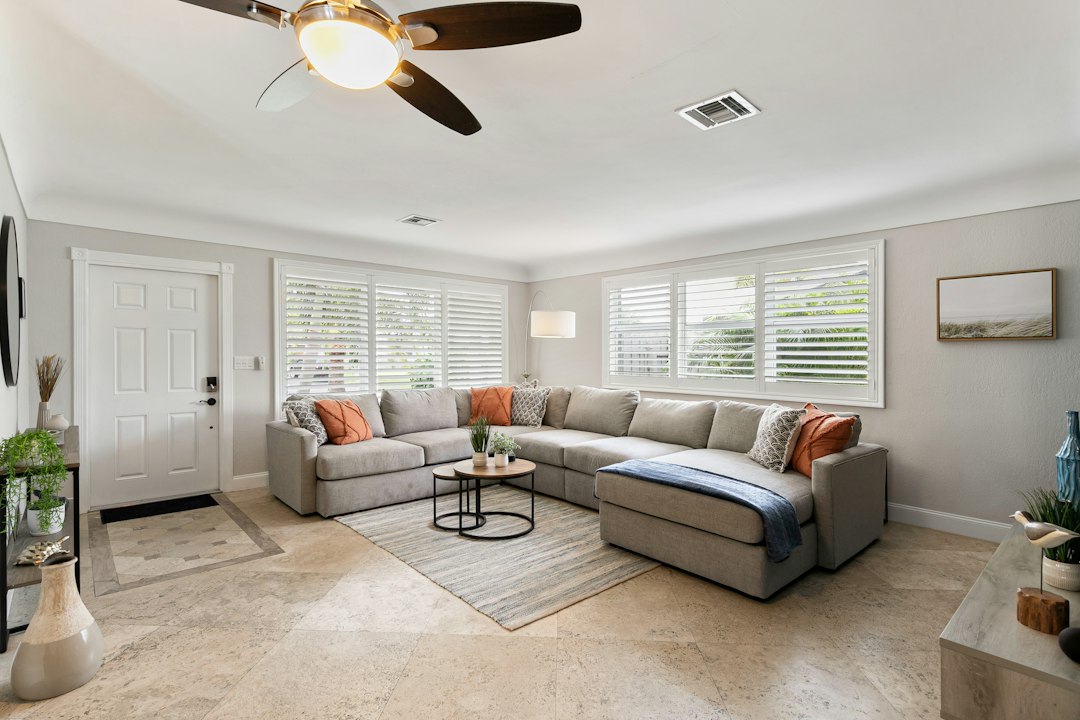
You just spent $18,000 furnishing a short-term rental, and now you are staring at a pile of receipts wondering how much of it actually shows up on your tax return this year. The answer is: probably most of it, and for many STR owners, all of it. But the route matters.
TL;DR: Most STR furnishing expenses, including furniture, appliances, decor, and qualifying personal property, can be fully deducted in the year you place them in service. For property acquired and placed in service after January 19, 2025, 100% bonus depreciation under IRC §168(k) applies permanently. Items below the de minimis safe harbor threshold can be expensed directly. What you cannot immediately write off is the building structure and raw land.
Jennifer Beadles is a real estate investor and short-term rental owner who uses the STR loophole on her own properties. She writes from hands-on operating experience plus current IRS guidance (IRC §469 and Treas. Reg. §1.469-1T(e)(3)(ii)(A)).
Which STR Furnishing and Design Expenses Are Fully Deductible in Year One?
The short version: personal property items with a MACRS recovery period of 20 years or less qualify for 100% first-year bonus depreciation under IRC §168(k). For an STR, that covers most of what you buy at the furniture store or order online.
Here is the breakdown by category:
Personal property (5- and 7-year MACRS): Furniture, beds, sofas, dining tables, desks, dressers, artwork, televisions, small appliances, kitchen equipment, and most freestanding items. These are classified as 5- or 7-year property under IRS Publication 946 and are eligible for 100% bonus depreciation when placed in service after January 19, 2025.
15-year land improvements: Outdoor furniture, patios, sidewalks, landscaping, and fencing attached to the land (not the building) can qualify for 15-year treatment and also fall within the 20-year-or-less rule for bonus depreciation.
De minimis items expensed outright: Small decor, linens, throw pillows, kitchen utensils, cleaning supplies, and similar low-cost items often fall below the de minimis safe harbor threshold under Treas. Reg. §1.263(a)-1(f). If you do not have an applicable financial statement (most individual STR owners do not), the threshold is $2,500 per item. You simply expense those in the year of purchase, no depreciation schedule required.
What does NOT qualify for year-one full deduction: The building itself depreciates over 27.5 years (residential) or 39 years (commercial). Land is never depreciable. Permanent structural additions, like adding a bedroom or enclosing a porch, are generally capitalized unless a cost segregation study reclassifies portions of them into shorter-lived components.
The Three Paths to a Year-One Deduction
There is more than one way to get to a full write-off. Knowing which path applies to your situation saves you from either missing deductions or creating paperwork complexity you do not need.
Path 1: Bonus Depreciation (IRC §168(k))
This is the workhorse for most STR furnishing deductions. For property acquired and placed in service after January 19, 2025, the One Big Beautiful Bill Act permanently restored 100% first-year bonus depreciation. There is no phase-down, no sunset, no expiration date to race against.
You buy a $3,500 bed frame, a $1,200 smart TV, and a $4,800 sectional sofa. Each item is 5- or 7-year personal property. Under current law, you deduct 100% of each in year one. No cost segregation study needed for these standalone purchases.
For a deeper look at how bonus depreciation pairs with the STR loophole strategy, see our breakdown of bonus depreciation strategy for STR investors.
Path 2: Section 179 (IRC §179)
Section 179 lets you elect to expense qualifying property up to a $2.5 million deduction limit (with a phaseout beginning at $4 million in total property placed in service). For most individual STR owners, you will never come close to those limits.
Section 179 and bonus depreciation often produce the same result at the item level, but they differ in one key way: Section 179 cannot create a loss for your business, while bonus depreciation can. Since the whole point of the STR loophole is generating a paper loss to offset W-2 income, bonus depreciation is usually the better choice when your furnishing costs exceed your rental income.
Path 3: De Minimis Safe Harbor (Treas. Reg. §1.263(a)-1(f))
Items under $2,500 per invoice or per item (for taxpayers without an applicable financial statement) can be deducted immediately under the de minimis safe harbor. You make an annual election on your tax return, and those items never hit a depreciation schedule at all.
This is the practical path for the smaller stuff: the set of wine glasses ($60), the Welcome basket supplies ($45), the throw blankets ($120 for four), the spare set of bedding ($180). None of those are worth setting up a five-year depreciation schedule for. Expense them, done.
When You Do Need a Cost Segregation Study
For the furniture and appliances you buy separately, you do not need cost segregation. Those items already arrive with the right classification.
Cost segregation becomes relevant when you want to reclassify components that are embedded in the building's purchase price. When you buy a property, the IRS default is to depreciate the entire structure (minus land) over 27.5 or 39 years. A cost segregation study has an engineer break the building into its components and reclassify things like:
- Specialty flooring (tile, hardwood, carpet)
- Cabinets and countertops
- Electrical systems dedicated to specific equipment
- Decorative lighting and plumbing fixtures
- Outdoor improvements (patios, decking, parking areas)
Those components, typically 25 to 35 percent of the depreciable basis, get reclassified into 5-, 7-, or 15-year property. With 100% bonus depreciation now permanent, that reclassified basis gets deducted in full in year one.
Our article on furnishing and staging deductions for STR properties covers the depreciation mechanics in more detail. And you can run the numbers for your specific property in our cost segregation calculator.
A Worked Example: The Full Year-One Deduction Picture
Here is a realistic scenario so the math is not abstract.
Assumptions:
- Purchase price: $350,000 (building value $300,000 after land allocation of $50,000)
- Separate furnishing purchases: $22,000 (sofa, beds, dining set, TVs, appliances, decor)
- Cost segregation identifies $75,000 in reclassifiable components (25% of $300,000)
- Marginal tax rate on W-2 income: 35%
- Property placed in service: 2025, after January 19
- Average guest stay: 6 days. Material participation: satisfied via the 100-hours-and-more-than-anyone-else test
Year-one depreciation without cost segregation:
- Building ($300,000 minus $75,000 reclassified = $225,000) at 27.5 years: $8,182
- Separate furnishings ($22,000) at 100% bonus: $22,000
- Total year-one deduction: $30,182
Year-one depreciation with cost segregation:
- Reclassified components ($75,000) at 100% bonus depreciation: $75,000
- Separate furnishings ($22,000) at 100% bonus: $22,000
- Remaining building ($225,000) at 27.5 years: $8,182
- Total year-one deduction: $105,182
The tax impact: Without cost segregation, you get $30,182 in deductions. At 35%, that is $10,564 in tax savings.
With cost segregation, you get $105,182 in deductions. At 35%, that is $36,814 in tax savings.
The difference is $26,250 in additional cash in your pocket, in year one. The cost segregation study itself typically runs $3,000 to $8,000 for a residential property. The math usually works clearly in favor of doing it.
One critical note: this only generates real tax savings if your STR losses are non-passive. If your average guest stay is 7 days or less and you materially participate, those paper losses flow through to offset your W-2 income dollar for dollar under the STR exception at Treas. Reg. §1.469-1T(e)(3)(ii)(A). If your losses are passive, they sit in a carryforward bucket until you sell or have passive income to absorb them. The deduction still exists, but you do not feel it this year.
The Non-Passive Piece: Why Material Participation Is Not Optional
Generating a large year-one deduction through furnishings and cost segregation is the first move. Making that deduction actually reduce your tax bill this year is the second move, and it requires the STR loophole.
Your short-term rental is not a "rental activity" under IRC §469 if your average guest stay is 7 days or less (Treas. Reg. §1.469-1T(e)(3)(ii)(A)). That means the passive activity loss rules do not automatically trap your losses. But you still need to materially participate.
The most common test is the 100-hours-and-more-than-anyone-else standard under Treas. Reg. §1.469-5T. You need more than 100 hours of participation AND more hours than any other person, including your cleaner, your co-host, and any property manager. You do not need 750 hours. You do not need Real Estate Professional Status. The STR loophole is a separate, simpler path.
Proving those hours requires contemporaneous records. Tax court cases like Almquist and Penley show that after-the-fact estimates and rounded-hour logs without time stamps lose. Our STR tax deduction checklist for 2026 includes the documentation standards you need alongside your furnishing receipts.
A Note on Design and Staging Costs
Design fees paid to an interior designer or stager are a legitimate operating expense. If the work is done before the property opens for rental, those fees are startup costs under IRC §195 and may need to be amortized. If paid while the property is already operational, they are ordinary business expenses deducted in the year paid.
Photography for your listing, staging consultations, and similar costs follow the same rule. Keep the receipts and note the date relative to your property's first rental date.
Key Takeaways
- Furniture, appliances, and personal property with a MACRS life of 20 years or less qualify for 100% bonus depreciation in year one under current law (post-January 19, 2025 purchases).
- Items below $2,500 (per item, no applicable financial statement) can be expensed immediately under the de minimis safe harbor.
- Cost segregation unlocks year-one deductions on building components that would otherwise depreciate over decades. It is not required for standalone furnishing purchases.
- Bonus depreciation generally beats Section 179 for STR owners because it can create a loss, which is the whole point.
- None of this generates real current-year savings unless the losses are non-passive, which requires the 7-day average stay and material participation under the STR loophole.
Comparison: Three Deduction Methods for STR Furnishings
| Method | Best For | Requires Cost Seg? | Can Create a Loss? |
|---|---|---|---|
| 100% Bonus Depreciation | Furniture, appliances, 5-7-15 yr property | No (for standalone items) | Yes |
| Section 179 | Same property, capped at income | No | No |
| De Minimis Safe Harbor | Items under $2,500 each | No | Yes |
| Straight-line Depreciation | Building structure | No | Yes (slowly) |
| Cost Segregation + Bonus | Embedded building components | Yes | Yes |
Sources
- IRC §168(k), Bonus Depreciation, as amended by the One Big Beautiful Bill Act (July 2025)
- IRC §179, Section 179 Expensing
- IRC §469, Passive Activity Loss Rules
- Treas. Reg. §1.469-1T(e)(3)(ii)(A), STR Exception
- Treas. Reg. §1.469-5T, Material Participation
- Treas. Reg. §1.263(a)-1(f), De Minimis Safe Harbor
- IRS Publication 527, Residential Rental Property
- IRS Publication 946, How to Depreciate Property
This article is for educational purposes only and is not tax or legal advice. Talk to a CPA who knows short-term rentals before you act on it.
The Bottom Line: Pull every furnishing receipt from your STR setup, categorize each item by type, and have a CPA familiar with short-term rentals review whether bonus depreciation, Section 179, or the de minimis safe harbor applies. If your property has significant personal property, a cost segregation study is almost always worth the cost. Make sure you are also logging your management hours so you can prove material participation and make those losses non-passive under the STR loophole.
Ready to see if you qualify? Try the free STR loophole calculator →
Start Tracking Your Hours Today
STR Loophole makes documentation effortless. Sign up free on the web, then log from your desk or the mobile app — everything syncs.